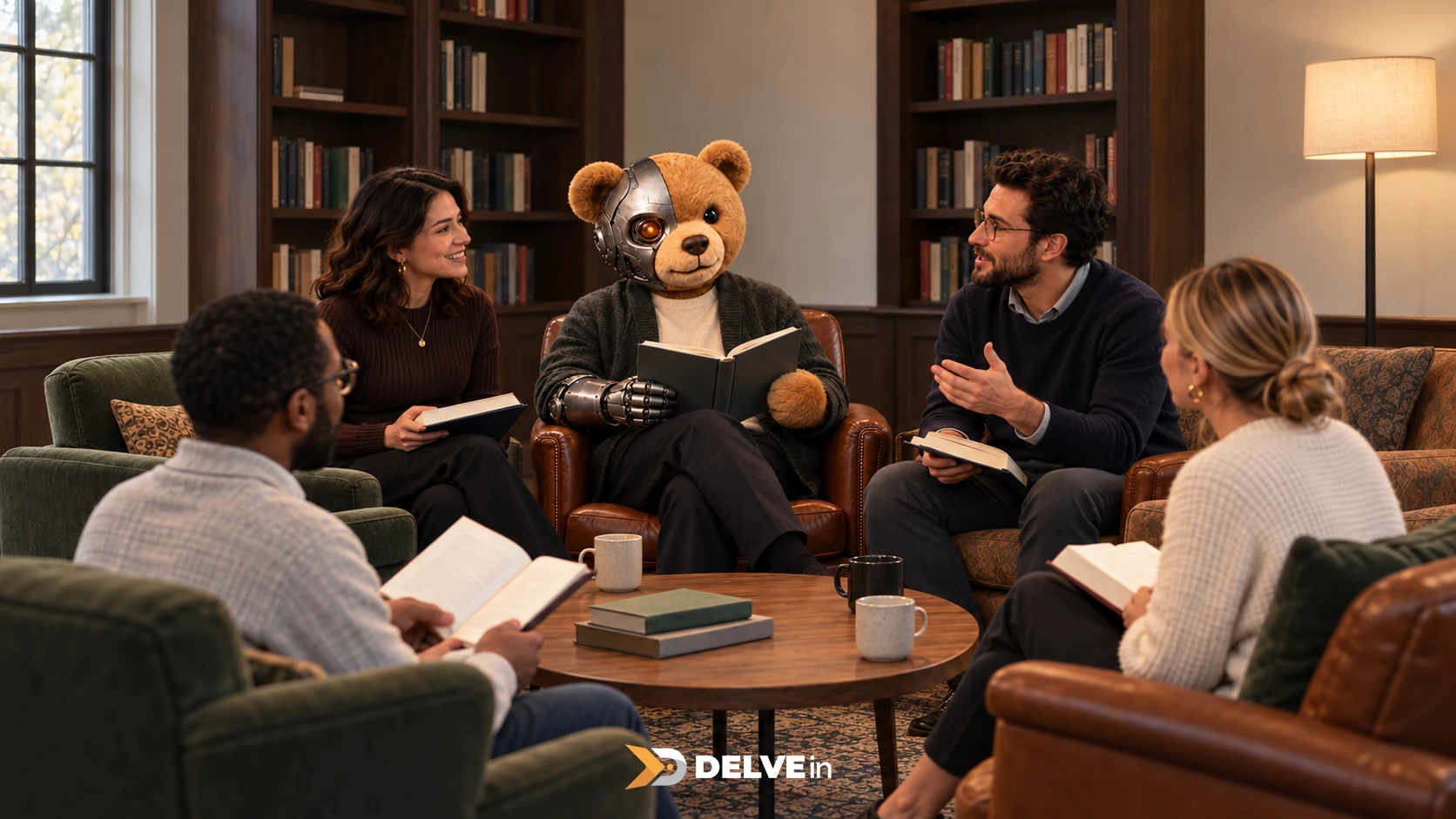
Every brand wants a community. But how do we build one for a B2B brand? Giving the newsletter a nicer name will not do it. Neither will sending it to the same mailing list. So what would a real B2B book club look like?
Start with the original. Nobody joins a book club for the book. It gives a handful of people a reason to sit in the same room every month, and the room is what they come back for. Ask a member how the last book ended, and you may get a shrug.
The consumer world keeps rediscovering this. Fashion houses are opening cafes and coffee shops. Beauty brands host workout classes. Run clubs, book clubs, cooking clubs and members-only dinners are everywhere. Inc recently argued that the best ones start with something people already do. They already run together, read books and eat dinner. A logo is optional. The hard part, the column said, comes after the launch party.
Meanwhile, B2B events are getting smaller. Forrester’s Q1 2026 survey of more than 400 event decision-makers found nearly 70% are reducing the number of events they run. A majority plan more intimate networking events and in-person events under 200 people. Only 18% plan more large hosted events, and two-thirds plan more workshops, roundtables, and structured networking. That looks more like a book club than a trade show.
So the question gets practical. What turns a small gathering into something people return to? Three things stand out to us.
The excuse is not the business. Executives run, cook, garden, and lift weights, and any of those can be the reason to join a club. Ogilvy’s 2026 Futures report describes the same pull. One of its trends, internet intimacy, is people moving toward smaller, interest-driven communities. Another describes private online groups turning into real-life meetups around shared passions. Picture two executives on a Saturday morning run. Within a mile, they are talking about hiring, budgets, and a difficult board member. Nobody planned it, and nobody was sold to. The best business conversation of the week may happen at mile three.
Then there is a reason to come back. A one-off event ends when the room empties. A book club ends each meeting with the next one already planned. The conversation carries over from month to month, so missing one means missing the thread. Think of the text that says “are you coming Thursday?” It does more work than any calendar invite. People return because someone expects them, and because of what they would miss.
Last, there is the person who decides who is in the room. From what we see, this is where many B2B communities go wrong. The activity is rarely the problem. The problem is that everyone is welcome. A room that admits everyone is a mailing list with snacks. Membership means something only if someone can say no, and the members have to trust the person saying it. Ogilvy points the same way. Its human algorithm trend describes human curators and niche tastemakers becoming the most trusted filters in an automated digital world. When feeds are automated, a person who chooses the room becomes the scarce thing. Brands rarely think of themselves as curators.
Then comes the question every marketer asks. Should a club be measured at all? Is it worth trying, or does counting it change what it is? How would we even measure it? And if we can measure it, what should we count? Deals closed among members? Board appointments? Introductions made? Something nobody has thought to track yet?
We do not have the answer. We are working through it ourselves, and we will share more when we have something real to say. In the meantime, what would a real B2B book club look like for you? And what is your excuse to show up?
What Does a B2B Book Club Look Like?
Nobody joins a book club for the book.